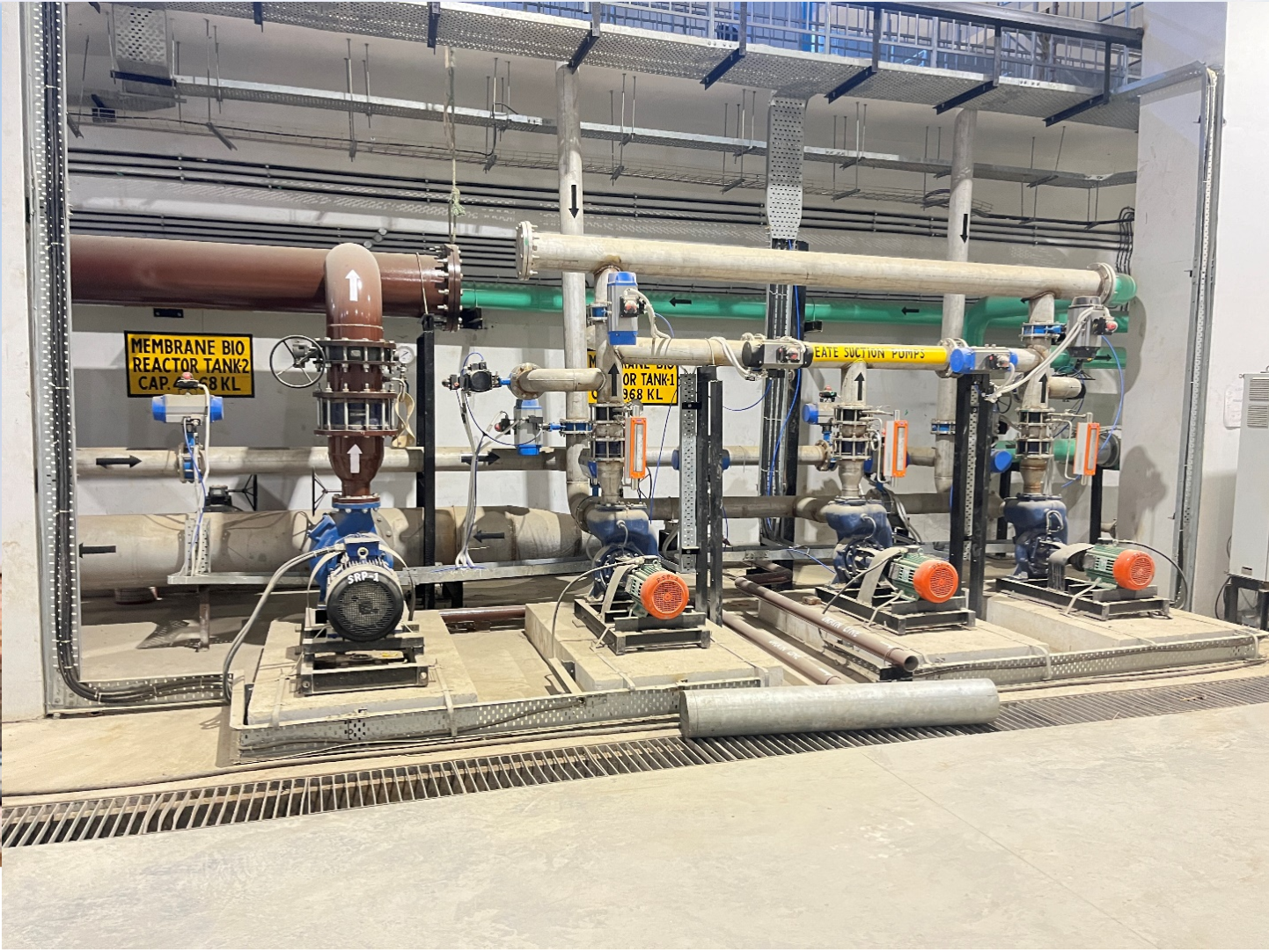
The specifications of a Membrane Bioreactor (MBR) plant can vary depending on factors such as the intended application, capacity, and specific requirements of the project. However, here are some typical specifications:
1. *Treatment Capacity:* MBR plants can be designed to treat various volumes of wastewater, ranging from small-scale systems for residential or decentralized applications to large-scale plants serving municipalities or industrial facilities. Capacities can range from a few cubic meters per day to tens of thousands of cubic meters per day or more
2. *Membrane Type and Material:* MBR systems use membranes with pore sizes typically in the range of 0.1 to 0.4 micrometers. Membranes can be made of various materials such as polyethylene, polypropylene, or polyvinylidene fluoride (PVDF), and can be in the form of flat sheets or hollow fibers.
3. *Bioreactor Configuration:* MBR plants include bioreactors where biological treatment occurs. These can be configured as either submerged or external, depending on the specific design and operational preferences.
4. *Aeration System:* Aeration is essential for promoting microbial activity and maintaining proper mixing in the bioreactor. MBR plants employ diffused aeration systems to provide oxygen to the microorganisms.
5. *Membrane Cleaning System:* MBR membranes require periodic cleaning to remove accumulated solids and maintain performance. Systems may include backwashing, air scouring, chemical cleaning, or a combination of these methods.
6. *Monitoring and Control System:* MBR plants are equipped with monitoring sensors and control systems to regulate various parameters such as dissolved oxygen, pH, temperature, and membrane fouling. Advanced control strategies may be employed to optimize performance and energy efficiency.
7. *Effluent Quality:* MBR plants can achieve high-quality effluent with low concentrations of suspended solids, biochemical oxygen demand (BOD), and pathogens. Effluent quality may need to meet specific regulatory standards or reuse criteria depending on the application.
8. *Footprint and Space Requirements:* MBR systems typically have a smaller footprint compared to conventional treatment processes due to the compact nature of membrane filtration. However, space requirements will vary depending on the design and capacity of the plant.
These specifications provide a general overview, and actual MBR plant designs will be tailored to meet the unique needs of each project. Consulting with engineering firms or suppliers specializing in wastewater treatment equipment is essential for developing detailed specifications and selecting the most suitable system configuration for a specific application.
Brochure
View our brochure for an easy to read guide on all of the services offer.